Showing posts with label Bicycle Playing Cards. Show all posts

Monday, February 13, 2012

Toy Fair 2012: Bicycle Jacked Up!


Bicycle is integrating playing cards with QR tech to create some neat twists on War, Hearts, and Solitaire

- Posted using BlogPress from my iPhone

Wednesday, February 2, 2011

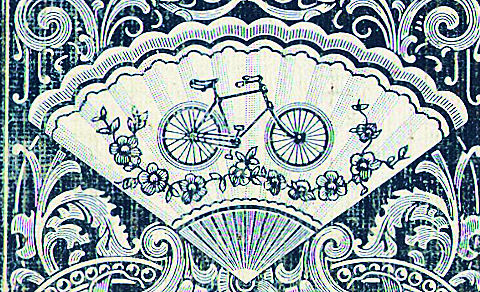
Bicycle Fan Backs (Vintage)

 I picked up this old example of a Bicycle "Fan Back" in the same auction with the USPC swastika cards. I can't possibly date them, since they seemed to have either been used heavily or perhaps put through the wash a few times. That said, I'm pretty confident in calling them "really old."

Click to enlarge
Detail

Friday, January 28, 2011

Swastika Playing Cards Revisited

As I wrote last week, I've been trying to get my hands on a somewhat rare set of cards from the US Playing Card Company (makers of Bicycle, Hoyle, and other brands). This particular design features a pattern of swastikas, leading some to speculate that it was made for export to Nazi Germany. I think I demonstrated fairly conclusively that this was nonsense, and that the design was merely a common motif (sometimes a symbol for good luck) that was probably discontinued after Hitler rose to power.

Well, I finally won an auction for a single example of the card, and here it is. Based on various features, I'd date this one to sometime in the 1930s. It's in amazingly good condition for its age, with a firm coating, no bends or creases, and very little discoloration.


Tuesday, January 18, 2011

Swastika Playing Cards

I've been trying to get my hands on a strange old example of early 20th century card design from the US Playing Card Company. These are "No. 500" cards, possibly produced as early as 1909, and made until sometime in the early-to-mid-1930s. The entire card back is covered in an intricate pattern of swastikas.

Prior to the rise of National Socialism, the swastika was a common graphical motif, found in everything from Indian blankets to architectural details. (My wife's grammar school featured a nice tiled row of swastikas when she was young. I doubt very much they're still in place.) The prominence of the design in many cultures with a wide geographical and historical spread is actually easily explained: it's a common repeating pattern that naturally forms in certain types of basket weaving.

When Hitler adopted the "crooked cross" as the Nazi Party symbol, the once-harmless design took on sinister connotations which it shall never shed. I read some speculation online that these cards were produced by USPC for export to Nazi Germany, which is absurd on various levels. German card design is different, for one thing, and they had no need to import cards. The idea that Nazi Germany would have imported French-suited playing cards from the US is just silly.

Here's the best quality picture I can find, and this one came from an auction that I lost. If I can get hold of a better quality version, I'll post it at a later date.

Friday, January 7, 2011

A Closer Look: Bicycle Rider Backs--Chainless

Click to enlarge.
 The Rider Back "Chainless" design was used from 1899 until 1917. The design appears to show an unusual shaft-driven bicycle, introduced to America in the early 1890s. By 1899, when the card was designed, chainless bikes were still a bit of a curio.

"Chainless" detail.

Design detail.

Thursday, January 6, 2011

A Closer Look: Bicycle Rider Backs--Tri-tire #2

Click to enlarge.
Wheels within wheels characterize Bicycle's second "Tri-tire" design, used between 1905 and 1927. These cards are fairly light blue, so I didn't want to jack the colors up to high. The wing motif implies speed, but more curious is the six-pointed star at the center. Perhaps it was some kind of hub design from the period.

Detail.

Wednesday, January 5, 2011

A Closer Look: Bicycle Rider Backs--Pedal Back

Click to enlarge.
The Pedal Back design was introduced in 1899 and used until 1917. This is a remarkably modern style of pedal for the period, since many pedals still used clips or stirrups by the turn of the century. You can see a timeline of pedal development at Speedplay.


Tuesday, January 4, 2011

A Closer Look: Bicycle Rider Backs--Pnuematic #1

Click to enlarge.
This particular design was featured on card backs from 1894 until 1908. John Dunlop invented the first pneumatic tires in Scotland in the 1880s: a combination of fabric, wire, and rubber that created a far smoother ride and revolutionized the bicycle industry. This Bicycle card back was the first to feature the new pneumatic tires.

Detail

Monday, January 3, 2011

A Closer Look: Bicycle Rider Backs--Anniversary Edition

Click for full size

I haven't posted much card art lately, but I'm rectifying that this week with five new Bicycle sets. I found them at B.J.s Wholesale Club, of all places, as part of a "Limited Edition 125th Anniversary Design Collector's Set." (Hey, it's their name, not mine.)

Click to enlarge.
For about $12, you get 5 decks plus Bicycle's Official Rules of Card Games, a 300+ page book which makes the whole package a pretty good value.

The centerpiece of the set is a reproduction of the original Bicycle cards, first produced in 1885. These are pretty widely available, but I'd never bothered to pick up a deck. The picture at the top shows you just what the first Bicycle Rider Back looked like. The bicycle implied a great deal to a late 19th century audience: freedom, travel, technology.

For the reproduction set, Bicycle even changed the card faces a bit, reducing the corner markings to their original size.

Also included is a reproduction of the original Joker, named the "Best Bower," (also known as the "Benny" or "Imperial Bower"). In Euchre, the "Best Bower" is the top-ranked trump, indicated by either the Joker or the Two of Spades.


Tuesday, September 28, 2010

Bee Club Special: A Closer Look

Bees are one of my favorite cards. They have history, style, and a good feel. Until USPC send me some plastic cards, I never used anything but Bicycle and Bee, and I still think Bee is perhaps the best paper card made.

Consolidated-Dougherty started printing Bees in 1892, which explains that mysterious "92" on the Ace of Spades. USPC aquired the company soon after, and they've been printing them ever since.

They're a popular casino brand, and sometimes you can find them in discount stores with casino logos on the backs. They're also apparently a popular card for counterfeiters, as this site amply demonstrates.

The most striking aspect about Bees are their borderless backs. The diamond pattern on the back extends all the way to the edges, and creatives a distinctive down the sides of a stacked deck.

Face designs have been standardized in line with Bikes, but the Ace and Joker remain distinct.
Detail (Bee Joker)


Detail (Bee Ace)

Monday, September 20, 2010

Hoyle Maverick: A Closer Look

Mavericks are another brand that USPC acquired from Hoyle, and one of the few that's not made in the USA. These come from China, and are generally not up to the quality of other USPC cards. They just feel ... ordinary.

The reason I'm including them is because they really are an odd cultural relic. When I first started looking at them, I noticed they had a western theme, from the Maverick font, to the horse on the Joker, to the stylized Ace.

That's because Mavericks almost certainly entered the market as a tie-in (either official or unofficial) to the James Garner TV show of the same name. Since Bret Maverick was a card sharp, cards featured heavily in the show, so it was natural tie-in.

The show began in 1957 and went off the air in 1962, which means that this is a pop culture artifact that survived 48 years longer than the show it was based upon. I just think that's cool.

Brand loyalty is the reason decks like Aviator and Maverick remain in print. As a company representative told me, "Each brand we manufacture has a deep history and avid followers. People remember playing with specific brands growing up and want to continue that tradition."


Friday, September 17, 2010

Hoyle Playing Cards: A Closer Look


Brown & Bigelow has been around since 1896, manufacturing various printed products and promotional items, primarily advertising. They started printing playing cards in 1927, and their Hoyle brand became so famous that they changed the name of the company to Hoyle in 1975. In 2001, USPC aquired the card line and the Hoyle series, which had grown to include a long-running series of computer and video games, books, and other products.

The main card bearing the name of Hoyle Playing Cards is an American-made card comparable to Bicycle in weight, finish, and durability. It's a good , durable coated paper card, and I can understand how it developed a solid following over the years.

Hoyle Playing Cards use a completely different set of face-cards, with a finer line and a more angular, modernist art style. Notice in the pictures below how the Queen of Hearts has squared fingers (as though she was drawn by Mike Mignola) and a more disapproving expression. The strong black outlines show an artist skilled with pen-and-ink, and capable of drawing an expressive line. (As a classic comic fan, I'm a huge admirer of artists with a strong pen line. I think the ink line of Charles M. Schulz is one of the high points of 20th century art.)

Hoye's have a distinctive card back depicting Poseidon with a trident and clam shell. There's no particular reason for this, but it looks dang spiffy.


Queen of Hearts: Bicycle (left) & Hoyle (right)

Corner detail

Friday, September 10, 2010

Bicycle Prestige: A Closer Look

I'm not a big fan of people fancifying my playing cards, so I never bothered with things like premium or plastic cards. I assumed all plastic cards felt funky, shuffled badly, and cost too much. I was a little dubious when USPC sent me some KEM and Bicycle Prestige, but after a lot of play time I have to admit that I'm convinced. 

Bicycle Prestige are made with USPC's "Dura-Flex" technology. I have no idea what that means, but it sounds better than "that machine we use to make them there plastic cards." The result is a card with a texture like paper, and an appealing springiness. These don't feel slick and stiff like some plastic cards. They actually shuffle better than paper, and retain their shape better.

Corner detail
Angel detail
Yes, they cost a lot. If I hadn't spent time with them, I'd be reluctant to shell out $10 for a single deck of cards. However, I've blown more money than that buying multiple decks that wore out or got damaged much faster. If you play in public, particularly in bars and restaurants where wet spots, food, and spilled beer are common, then this will actually be a money saver. They're harder to damage and easier to clean. You can just wipe them off with a wet rag. They even come in a handy little travel case, and, as you can see from the screens, have a handsome re-designed back.

If you're an occasional home player, I don't see a lot of point in premium cards. But if you're a little more serious, play with kids who are hard on paper cards, need some added durability, or play in public, then this is a good bet.


Friday, September 3, 2010

Bicycle Rider Backs (808s): A Closer Look

We’re beginning this series on playing cards with the most popular card maker and brand in history, the US Playing Card Company and their Bicycle cards. (Click on the images for higher resolution art.)

Corner detail
First, a little history. US Playing Card was founded in Cincinnati in 1867, Russell, Morgan & Co began as a general printhouse, but in 1880 they started making playing cards. New machines were designed, and about 20 employees set about making 1,600 decks per day.

The Bicycle brand was introduced in 1885, and by 1891 cards had come to dominate so much of their business that they changed their name to US Playing Card Company. They grew partly through acquisition, standing over several card companies with brands dating back to 1833, among them the famous Bee brand.


Detail: Naked Cycling Angel
Bicycle is the most recognized card brand in the world. Over the years the design has changed, but a few things have stayed common, such as the naked bike-riding angel on the card backs.

Why is there a naked bike-riding angel on the backs? It’s just one of the mysteries of the universe, so let us never speak of it again. (The angel was probably meant for luck, as a Guardian Angel, and the bike was possibly just an example of a piece popular technology from the time.)

There are a number of Bicycle versions, with different colors, different kinds of bikes, and different card back designs. The most ubiquitous are simply known as Rider Backs, or "808s” from the brand number, and are the standard poker-faced design. These come in numerous configurations, such as Bridge (smaller size), Pinochle (48 cards, 9 through Ace, doubled), Poker, and so on, but all share similar card back and face designs.


Joker Detail


The distinctive Ace, featuring a symbol of lady liberty, has it's own bit of lore, as USPCC explains:

The Ace of Spades served a famous purpose in the war in Vietnam. In February, 1966, two lieutenants of Company "C," Second Battalion, 35th Regiment, 25th Infantry Division, wrote The United States Playing Card Company and requested decks containing nothing but the Bicycle Ace of Spades. The cards were useful in psychological warfare. The Viet Cong were very superstitious and highly frightened by this Ace. 

The French previously had occupied Indo-China, and in French fortunetelling with cards, the Spades predicted death and suffering. The Viet Cong even regarded lady liberty as a goddess of death. USPC shipped thousands of the requested decks gratis to our troops in Vietnam. These decks were housed in plain white tuckcases, inscribed "Bicycle Secret Weapon." The cards were deliberately scattered in the jungle and in hostile villages during raids. The very sight of the Bicycle® Ace was said to cause many Viet Cong to flee.

Detail: Ace of Spades
Bicycle cards are cheap but durable. The basic cards are coated paper with a matte finish that offers a nice grip. They're not too slick, like Aviators, and they hold up reasonably well. They're easy to find for $2 to $5 a pack, and are made entirely in the USA. This is your basic deck of cards, and if you don't have some in your home, you really should.

I'm going to do some more of these detailed posts because I think these items are wonderful examples of the printer's art, but we often don't pause to really look at them. I've scanned these at a very high level, and adjusted the images to emphasize the lines and colors, so click on the images to see the details.


You can still enter to win two packs of World Series of Poker branded Bicycle 808s from State of Play.