Friday, February 4, 2011

Cargo Noir: First Impressions

Cargo Noir
Days of Wonder
2-5 players
Ages 8 and above
30-90 minutes
Designed by Serge Laget

 Note: These comments are based on a single play session, which is insufficient for a complete review. It's just meant as a few quick, fresh-out-of-the-box thoughts, along with a more detailed explanation of the gameplay and rules. When I've put in more time, I'll adapt it as a final review.

Goal
Cargo Noir is a set-making game with an auction element and a number of unique characteristics that keep it interesting. The theme is cargo smuggling among exotic ports throughout the world. You play as one of 5 organized crime syndicates, moving a fleet of ships from port to port to collect cargo tokens. These are, in turn, traded for victory spoils, which determine the winner of the game.

Production & Components
The quality of the components is top-notch, as we'd expect from Days of Wonder. The gameboard is created by placing together different ports of call tiles around a large central square representing Macao. The game comes with 25 rubberized ships (5 for each player), 60 plastic cold coins, 131 small cargo tokens on heavy cardboard, 54 victory cards, 5 family sheets, a wooden turn marker, a cardboard ship used to designate the first player, and a cloth bag used for blind drawing of cargo. The main game board is heavy cardboard, while the family sheets are lighter card stock.

The art is wonderful, and the game really embraces its theme throughout every aspect. Even the little boats match the visual style created by Small World's master artist Miguel Coimbra.The art is filled with small, funny details, and loaded with character. No one is doing better game art than Coimbra right now.

Although it's quite possible my brain simply went on vacation last night, I simply was not able to get the pieces back in the box in a satisfactory way. The insert is all carefully sculpted so that I should be able to, but there are so many little cargo tokens, as well as a bulky bag of ships, that I just couldn't make it fit. Am I missing something?

Scalability
We tested the game once with 4 players, but it uses clever board configuration to scale up to 5 or as low as 2. By flipping certain port tiles, you're able to "close" various ports, thus reducing the locations where people can contend for cargo. This seems like a clever solution to the scaling issue, but I haven't yet tested it in practice.

Gameplay
The game is played over 10 or 11 turns depending upon number of players, with each turn featuring 3 phases. The phases are: 1. Resolve ship actions. 2. Trade cargo for victory cards. 3. Place ships.

The goal is to collect as much cargo as you can from various ports. There are 9 different types of cargo and 5 wild cards. These smuggled goods are cigars, cars, weapons, gold, jewels, uranium, ivory, alcohol, and art. You want to collect as many matching sets of cargo as possible, since sets are worth more in the trading phase. For example, 5 unmatched goods are worth 15 points in trade, but 5 matched goods are worth 25 points in trade. Thus, you want to start building sets of, say, ivory or gold, rather than just grabbing as many different goods as possible.

You also want to build sets because your warehouse capacity (located on your family sheet) is initially limited to 6 slots, which can each hold 1 type of cargo. This can be expanded by two slots for each extra Warehouse card you buy. Any cargo you can't store is lost at the end of the trading phase.

Cargo is acquired by sending your ships into various ports. You start with 3 ships, but can expand this up to 5 ships by buying extra Cargo Ship cards.

Each port is loaded with varying amounts of cargo. Cape Town, for instance, only offers 1 piece of cargo, while Rotterdam has 4. Cargo is captured when you are the only player in a port in the "Resolve ships' actions" phase of the game. In order to be that person, you have to place your ship on top of the number of coins you're willing to spend for the cargo. However, other people may place a ship in the same port, as long as they place that ship with 1 more coin than the highest "bid" for that cargo. The coins are thick plastic and stackable, allowing players to quickly compare the size of their bids.

If you are in the same port with another player's ship, you either have to increase the size of your bid to exceed the highest stack, or withdraw it. The person left with the only ship in a port then collects all the goods and pays his coins to the bank. The game thus becomes a matter of oneupmanship, since you can keep adding coins to your stack in order to get a key piece of cargo or keep an opponent from getting one.

The Macao port at the center of the board provides two extra functions. If you place a ship on the top half, you can either trade one good for another that's already in the Macao Black Market, or pull a random cargo piece from the bag. If you place a ship on the bottom half, you collect 2 gold from the Casino.

The point of coins is to increase your buying capacity for cargo, and the point of cargo is to buy victory spoils. These are things like yachts, villas, night clubs, and dive bars, each costing a certain amount of cargo, and each worth the same amount in victory points when you total your score a the end of the game. (A yacht, for example, costs 20 points to buy, and adds 20 points to your total score.) In addition, there are 6 unique cards which have asymmetrical values. These are things like the Showbiz card, which costs 36 but is worth 40 in victory points. Because they have irregular values, the unique cards help prevent ties.

Thoughts
It's too soon to render a full verdict, but we certainly enjoyed our first, 4-person test game, even though I misunderstood one of the rules. The game is actually surprisingly easy to learn and teach. (It's far easier to play than it is to describe.) The theme carries through all the components and design features, adding a great deal of character and flavor to the experience.

Sending out your ships to collect cargo, not knowing if someone is going to try to snatch them away from you with a higher bid, creates a good deal of tension and player interaction. Balancing ship distribution among cargo purchase, money acquisition, and black market trading adds a nice level of strategy to each turn.

Some house rules can be added to mix things up a bit, such as player-to-player trading for cargo. My son even starting coming up with rules that would allow you to steal or sabotage to increase the player interaction and tension.

Cargo Noir, however, doesn't really need any extra layers to make it work. Quick impression: this is a good game: entertaining, light enough for younger gamers, but with enough meat to allow for some interesting strategic play. I need to put in more time to get a real sense of it, but so far it seems like another winner for Days of Wonder.

Thursday, February 3, 2011

Dead Space 2: Stupid Advertising

Once I get a little further in the game, I plan to write about Dead Space 2. Short version: I'm liking it a lot. It's certainly sick and gross, but in a good way!

Right now, however, I want to write about the stupid "Your Mom Hates This" advertising campaign, in which EA shows clips from the game to unsuspecting middle aged women and films their horrified reactions. It is wrong on so many levels I don't know where to begin.

First, this is an M-rated game, which means it's not supposed to be sold or marketed to people under the age of 17. So who exactly is the target audience for this ad? Are there that many 17-and-ups who still want to cheese off Mom with a violent video game? What exactly is the message they're sending? Are the game companies serious about keeping violent content out of the hands of minors, or just "serious" in a wink-wink, you-really-need-this-game-to-be-cool way. The question answers itself.

Second, there's the idea that EA targeted "conservative" women for the ad. Here's their own description:
A mom’s disapproval has always been an accurate barometer of what is cool. So Dead Space 2 was put to the test.
At an undisclosed focus group facility in the heart of conservative America, over 200 moms were recruited to participate in market research. Only, this wasn't market research. The facility was rigged with hidden cameras, microphones, and a crew sitting behind the glass ready to document very single reaction, opinion, and emotion.
Upon arrival, the moms were individually ushered into a room and confronted with three massive monitors, a single chair, and a disembodied voice coming over the speaker system. They didn’t know what they were going to see. They were only instructed to be completely honest.
We then subjected each mom to the most action-packed, violent, disturbing footage Dead Space 2 has to offer.
Some were disgusted. Some were shocked. Others couldn't believe what they were seeing. And every single mom hated it.
It's so nice when hipster marketing twats stereotype an entire region, class, gender and political ideology in order to hawk their products.

Third, it plays on the most trite methods of reinforcing a generation's sense of their own coolness. Rational adults should balk at such shameless manipulation. Attempting to exploit the generational divide in order to sell a few more copies of a game is crass marketing at its worst.

Fourth, I'm frankly not all that keen on surprise "shock video" reactions. I remember when "2 girls 1 cup" reaction videos were going around, and thinking, "That's just wrong." Some little punk showed it to his grandmother, who looked like she was pushing 100, and the woman just seemed to fall apart. She shouted "What's wrong with you?" and it wasn't an idle question: she really wanted to know how and why such things could be, and why a child she had loved would subject her to it. (Little did she know that he would post it to Youtube in order to hold her horror up to the world for mockery.) It was heartbreaking. What is the value in this? What does it say about our humanity?

Fifth, it simply reinforces the stereotype that games are only for hip kids. We've come a long way in mainstreaming electronic entertainment. Many gamers are adults, women, and, yes, moms. The entire campaign just reinforces the notion that games are silly, offensive kid stuff. This is particularly odd for Dead Space 2, which not only has visceral, violent content, but also some mature psychological and character elements. It's the opposite of a cheap exploitation game, yet that's how it's being sold.

Finally, it's just dumb and cruel. There's a "pulling wings off flies" quality to it that speaks to the worst aspects of our personalities. It's one thing to enjoy certain kinds of mature entertainment, but quite another to drag them out into the public square and then jeer at those who are offended.

Here's the whole stupid ad for your perusal.


Crazy Machines Elements Coming This Spring


Given the popularity of physics gaming (particularly on mobile platforms) it was about time for Crazy Machines to stage a comeback. Crazy Machines Element is due in spring as download for both Xbox Live and the PlayStation Network. No word yet on an app version, but they'd be crazy not to make one. (Sorry about that one...)

Crazy Machines was the original chain reaction, Rube Goldberg puzzler, and it actually still gets a heavy workout from the junior gamers of Casa McD. This time, Crazy Machines is adding the four elements--fire, water, air, and earth--to the mix. There are also plenty of new parts, including flamethrowers and cloud machines.

I'll let the PR folks take it from here:

Crazy Machines Elements has three game modes. In Puzzle mode, players must finish 100 partially-built chain reaction machines using the parts specified to accomplish the various tasks. Inventors can create true chain reaction marvels that obey the laws of physics and not only satisfy the requirements of the task, but also demand some serious brain power, inventiveness and physical out-of-the-box thinking. 
An example of the fun: A ball knocks a candle over which then heats the water in a steam boiler, which in turn slowly starts moving a rope attached to it. The action of the rope rotates a grindstone tied to the other end, which rubs against another stone to generate a spark which lights the fireworks. Players can tinker with a variety of other crazy machines awaiting them in each chapter. 
Budding inventors can unlock numerous challenges by solving puzzles where they complete tasks using the fewest number of parts in the shortest time; there are as many ways to achieve a particular task as there are parts available. Crazy Machines also has an editor in which players can build and try out their own crazy machines!

Wednesday, February 2, 2011

HeroClix Surfaces in Middle Earth


My son and I have amassed a fairly sizable collection of Heroclix over the years, so I was saddened to see that Topps had killed the entire Wizkids operation, including Heroclix, in order to "align our gaming initiatives more closely with Topps current sports and entertainment offerings." 

I see this kind of corporate-speak all the time, and it always strikes me as the kind of short-sighted, unimaginative decision that gets made by accountants. Heroclix is a popular niche brand with a killer license. There are creative ways to make that work within any company. If you've grown to a point that your management is too lazy or stupid to find those creative ways, then you're running your company wrong.

Apparently, a merchandising company named NECA, located in my home state of New Jersey, bought the Heroclix assets and are attempting to breathe fresh life into them.  First step? Add Lord of the Rings to the lineup.

Late in 2011, the new WizKids will publish "a HeroClix miniatures game followed by a HeroClix strategic board game."

Here's the official line:
"The Lord of the Rings" HeroClix miniatures game will be sold in two different packages: a campaign style box set and the traditional booster format. The all-in-one campaign style box set will include everything a player needs, including NEW epic level rules and maps. The booster format includes the figures, similar to other previous HeroClix releases. With whichever format chosen, all of the twenty or more figures will be compatible with other HeroClix miniatures games.
The second release is a unique semi cooperative HeroClix board game, following in the similar format of our other HeroClix board game products. HeroClix figures, a gameboard and several decks of cards provide all the components needed to play this unique take on "The Lord of the Rings" story. The fun twist in the game is that players get to play as the Nazgul working with and against other Nazgul trying to capture the One Ring before it reaches Mount Doom.

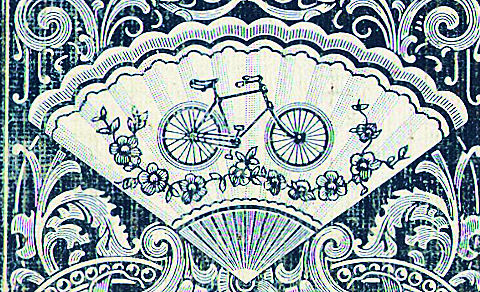
Bicycle Fan Backs (Vintage)

 I picked up this old example of a Bicycle "Fan Back" in the same auction with the USPC swastika cards. I can't possibly date them, since they seemed to have either been used heavily or perhaps put through the wash a few times. That said, I'm pretty confident in calling them "really old."

Click to enlarge
Detail

Tuesday, February 1, 2011

Windows 7 and Gaming

Yesterday was a column day, and it only took me 5 minutes to realize that my planned topic (Windows 7 and gaming) was going to be a dud. I was hoping that Windows 7 would do ... something for gamers. I don't know what. Maybe make them bacon and eggs.

What it did was a little bit of jack and a whole lotta squat. I'm not even getting higher benchmarks on Windows 7 than I did on Vista. It performs about the same. The Games Explorer allows you to access all your games from one handy place, which is a nice feature that cuts down on desktop clutter, but that's about it.

Even though I'm seeing few real gaming benefits, the OS is a welcome improvement over Vista. It runs well, the various Mac-ish graphical and navigational features are welcome, it's more stable, and the entire experience is just better.

The Windows Media Center remains a total clusterfark, of course. It runs like a sloth stuck in tar, and every time I start it up my laptop fan kicks into high gear. When I try to load my list of MP3s, the entire utility sees this as an opportunity to pop over to the neighbors for a cuppa and a little chat. It returns about 5 minutes later to offer me the single worst media interface I've encountered this side of DOS. Styling it after the Xbox interface might have been a good idea if a) this wasn't a computer OS, and b) the Xbox interface didn't already bite the wax tadpole.

On the positive side, the upgrade to Windows gave me some excuse to dig around in the native Windows games, which I'd never bothered to do with Vista. I'm actually pretty impressed.

The Games Explorer includes internet versions of Backgammon, Spades, and Checkers. These work marvelously well, anonymously matching players from around in the world in quick pickup games. Aside from the occasional drop-out player, I had no problems with these at all. They're simple, user-friendly, and work exactly as advertised. As a painless bit of light multiplayer, it's a terrific feature.

The versions of solitaire, chess, and hearts are fine, but certainly the last two would benefit from the same online matchmaking provided for backgammon, spades, and checkers.

Overall, a nice experience, but not one that can really sustain a full column. Instead, I wrote about horror gaming, with some thoughts on Dead Space 2 and Amnesia: The Dark Descent, both of which I plan to discuss in the future.

How to Make a Portable GamesChest Out of An Altoids Tin

Created by 'airship.' Check out the full picture to see tagged details of what it includes. I'll overlook the disgraceful lack of D20s, but maybe you can punch little holes in it for Cribbage?

h/t Julie D.  More great Altoids tin ideas can be found on the invaluable Art of Manliness site. (Seriously, spend some time on this site. Society has already slipped past the "Beta Male" stage and into the "Gamma Male" stage. Men need all the advice they can get.)

Friday, January 28, 2011

And the Name of the New Sony PlayStation Handheld Is....

... the NGP.

Well, that was kind of underwhelming.

It stands for "Next Generation Portable," which seems more like a description of the thing than an actual name. In all fairness, this may just be a working codename, like the Wii originally being called the "Revolution," before Nintendo announced the name would be "Wii" and everyone started making pee jokes; or when Microsoft's new motion control technology was called "Project Natal," before we were told it would be named "Kinect" and everyone said, "No, really, what are you planning to call it?"

This replacement for the PSP, whatever it winds up being named (I'm personally in favor of calling it the Frumious Bandersnatch, but do people very take my advice? No. Actually, that's probably for the best.) certainly specs out like a fine piece of next gen hardware.

I've said some remarkably uncharitable things about Sony over the years, to the point where they finally stopped sending me product, or giving me information, or braking if they see me crossing the street, so I'll just point you at the roundup of coverage over at Joystiq to fill in the sordid details.

The big picture is this: it appears to be a powerful system that is attempting to take on both Nintendo and the entire mobile gaming market at the same time. The big news is the 5-inch screen, which has four times the resolution of the current PSP, as well as a touchscreen. There is also a touchpad on the rear of the device, as well as dual analog sticks and six-axis motion control developed for the Move. All of these features are squarely aimed at capturing a piece of the app market.

Oh, and then there's the other stuff: WiFi, Bluetooth, and ... 3G, plus a GPS. Front- and back-facing cameras, flash-memory support, stereo speakers and microphone, all wrapped around a nougaty center made of an ARM Cortex-A9 4 core processor makes this a beast, in theory. Speculation is running high about how Sony can possibly get this device to market at a reasonable price. GameStop has already speculated that it may cost $1000, but that's just their guess.

Sony has a habit of floating their flights of design fancy just around the time a competitor announces or launches a product. In this case, the release is timed to take the wind out of the sales of the Nintendo 3DS by promising a Swiss-army knife of mobile gaming, but what's the actual reality behind the NGP?

The PS3 was going to be the all-powerful Xbox/Nintendo killer, and the reality was ... not really so much.

The Move was going to be the all-powerful Wii-mote/Kinect killer, and the reality was ... not really so much.

The NGB might be all things to all people, but somehow I don't think Apple, Nintendo, or the Android producers are all that worried right now.

In other Sony news ...

There's going to be a PSP phone, and engadget.com says they have their little mitts on one. The device will probably be called the Xperia Play, and looks like a mashup of a PSP with a Sony Ericcson handset.

Swastika Playing Cards Revisited

As I wrote last week, I've been trying to get my hands on a somewhat rare set of cards from the US Playing Card Company (makers of Bicycle, Hoyle, and other brands). This particular design features a pattern of swastikas, leading some to speculate that it was made for export to Nazi Germany. I think I demonstrated fairly conclusively that this was nonsense, and that the design was merely a common motif (sometimes a symbol for good luck) that was probably discontinued after Hitler rose to power.

Well, I finally won an auction for a single example of the card, and here it is. Based on various features, I'd date this one to sometime in the 1930s. It's in amazingly good condition for its age, with a firm coating, no bends or creases, and very little discoloration.


Wednesday, January 26, 2011

Struggle for Catan Coming This May

Today is the day for new release announcements from Mayfair. Next one up: Struggle for Catan: The Multi-player Card Game, releasing May 19 and retailing for $15.

Here's the official line:
The Struggle for Catan™ is a fast-paced game between the 2-4 factions developing newly settled Catan. Manage your resources to build settlements, cities, city improvements, knights, and roads that generate victory points or special abilities. While your settlements, cities, and city expansions remain yours, valuable roads and knights change hands. Varied expensive city improvements give you additional victory points and lasting advantages, so they’re generally key to victory. As in The Settlers of Catan® board game, you win by being the first to acquire and play 10 victory points.
The Struggle for Catan™ is the perfect way for 2-4 players to swiftly and casually explore, settle, trade, and build on the beautiful and ever-changing island of Catan.
The box contains:
• 67 Resource Cards
• 42 Building Cards consisting of:
• 9 Road Cards
• 14 Settlement/City Cards
• 5 Knight Cards.
• 9 City Improvement Cards
• 4 Building Cost Cards
• 1 Destiny Card
• full-color rules

Automobile Coming in February (Mayfair Games)

Martin Wallace is best-know for his superb train games, including my favorite, Steam. I'm very curious about his latest, called Automobile and due from Mayfair next month. Maybe I'll get a peak at it during Toy Fair.

Here's the official press release:

Mayfair Games is pleased to announce that it has finally received copies of Martin Wallace’s Automobile™ at its warehouse and will start shipping copies to retailers and distributors on January 31, 2011.  The game is scheduled to have a street date of February 17, 2011.  Mayfair Games apologizes for the many delays and thanks everyone for their patience. 
Automobile™ is the second in a series of transport games by Martin Wallace (the first being Steam™) and published by Mayfair Games (the “Planes, Trains and Automobiles” series).  The third title, involving the dawn of air travel, is currently in development.
Automobile™ joins a group of titles scheduled to be released from Mayfair Games in the beginning of 2011 including London™ (also by Martin Wallace), Van Helsing™ (by Frederic Moyersoen), 1830™ (by Francis Tresham), the re-released Catan Dice Game™ Standard Edition  and Struggle for Catan™: The Multi-Player Card Game ( both by Klaus Teuber).

PSP2 Announcement Tonight

Speculation about the Sony PSP2 is running pretty high ahead of the press conference scheduled for tonight. Dual-stick controls are a given, but could Sony also be entering ... the smartphone market?

Also of interest: What we think we know about the PSP2.

Stay tuned for more.

Posted from iOS using BlogPress.

REVIEW: Epic Mickey for Wii

Epic Mickey
Wii: $50, Rated: E (Everybody)


Note: This is an expanded version of a piece called "Through a Glass, Darkly, With Mickey Mouse," which I wrote for the National Catholic Register, and as such not only tackles narrative and gameplay, but also offers a religious interpretation of certain themes.

Mickey Mouse didn’t start out as a pleasant, smiling corporate icon, but as a bit of a mischievous trouble-maker, and not above the occasional bit of anti-social behavior. He wasn’t the first child of Walt Disney’s craft. He was only created when Disney lost the rights to Oswald and had to start over. This time, he created a cartoon mouse, started his own studio, and the rest is history.

At least, that’s real history. But there’s also cartoon history, which is a little more interesting. In cartoon history, Mickey and Oswald are half-brothers, and Oswald felt forgotten and betrayed by Mickey’s sudden rise to fame. 

And Oswald’s not alone. Over their long history, Disney’s studios have created many characters who either never made it to the screen, or were forgotten when they faded from popularity. In his magical workshop, Yen Sid (the titular magician of the “The Sorcerer’s Apprentice” segment in Fantasia) is working on a special place for these lost characters to call home.

This is the premise of Disney’s bold new Wii game, Epic Mickey. The story begins with a scene directly inspired by the 1936 short Thru the Mirror, as Mickey steps through a mirror into a magical dimension. He finds himself in Yen Sid’s workshop, just as the sorcerer is leaving. Mickey begins to play with the paintbrush used to create the new world, and in the process unleashes the Shadow Blot, who is obviously inspired by the Disney Comics character the Phantom Blot. Although Mickey narrowly escapes the Blot, the world for the forgotten is consumed by darkness. 

Mickey returns to his own reality, and becomes a famous movie star, oblivious to the destruction he has wrought until he Blot reaches through the mirror and drags Mickey back. The world that was supposed to be a haven is now called The Wasteland. Unloved and forgotten, no one in this land has a heart anymore, and even Oswald now hates his half-brother. The Blot wants to escape, and only the heart of Mickey Mouse can set him free.
Armed with Yen Sid’s magic paintbrush, Mickey embarks on a quest through this dark and ruined land in order to set things right and atone for his sins. With the brush, he can both create and destroy. When he uses it to spread paint, the world is restored, enemies are turned into friends, and things are set right. When he uses it to spread thinner, everything it touches is destroyed. The paintbrush is controlled via the Wii-mote, allowing the player to paint the world back into being, or tear it down with a flick of the wrist.

Guided by Gremlins (lifted from an unmade wartime movie collaboration between Disney and Roald Dahl), Mickey sets about rescuing allies and either destroying or converting foes. It’s certainly possible to play through with the thinner button pressed, washing the cartoon characters away to oblivion. But it’s more practical (and satisfying) to turn them into friends who might be able to help. 

Good Mickey, Bad Mickey?
It’s easy enough to ignore the pleas of characters who need Mickey’s help and take the easy (even cruel) path. But the game is designed to nudge you towards the higher road. It may be more difficult, but it’s almost always more rewarding. Help a gremlin now, and he may get through a sticky spot later on.

The ethical choices do affect the world: good choices restore it and make it bright and colorful, while bad choices degrade the world and sap it of color. Unfortunately, these changes aren’t permanent, and resuming a previous level resets the world to its prior state. This seems like an odd element for a game that stresses the importance of ethical choice.

The levels themselves are based on and inspired by various cartoon and theme park imagery, and overall they’re very appealing, with plenty of hidden details and attractive visuals. The goals for each level, however, are often rather perfunctory, and rarely lift the game above the level of a standard platformer/action game.

Part of this is almost certainly the result of the difficult balance designer Warren Spector is trying to maintain. The game was billed as a kind of dark, revisionist Mickey, and the initial concept art showed an amazing, complex world that would have looked wonderful rendered with, say, Unreal or Source.

But that really wouldn’t have been a Mickey Mouse game for the masses. Spector needed to create a complex take on Disney lore in general and Mickey in particular, while still providing an E-rated game that could be played by a 7-year-old. Amazingly, he succeeds, sounding depths you don’t usually find in this material, while also keeping things light and easy to play. In other words, the deeper levels are there for adults who tend to note some things, but kids can still fly through the game just spraying paint all over the place.

Technically, the experience is somewhat hampered by poor camera controls and finicky aiming. The camera never quite defaults to the best location, requiring fairly constant manipulation to get just the right angle on the action. There are places where it certainly seems like you have a clear line of sight at an enemy, but when you fire a stream of paint or thinner, it’s blocked by the scenery.

There are also some 2D platforming sequences that are used to link levels. These feel like filler, and are generally getting a thumbs-down from reviewers and games. I liked them, however. They draw heavily on old Disney shorts, which I adore, and provide a brief change of pace from the main 3D game. They’re not brilliant examples or 2D gaming—no one will mistake them for Super Mario Bros.—but they’re a nice way to link levels.

The Religious Angle
As the narrative proceeds and the relationship between Oswald and Mickey develops, it’s hard not to see Biblical themes emerging. Oswald feels forgotten and betrayed by his “father” (Walt Disney) and jealous of his half-brother (Mickey), whom he obviously feels is loved better. Oswald tries to kill Mickey several times, with fairly obvious echoes of the story of Cain and Abel.

The religious themes become more pronounced as the game’s central dilemma plays out. The characters in The Wasteland are not naturally cruel. They are literally “heartless” because they feel forgotten and unloved. Mickey shines a little brighter because of his big heart, which is why the forces of darkness are pursuing him. In the end (big spoiler alert) Mickey simply gives himself up to the Blot in order to save his brother and his friend, the gremlin Gus. The Blot takes Mickey’s heart, and destroys The Wasteland.

But as the Blot attempts to escape, Oswald, Mickey and Gus team up to destroy him and recover Mickey’s heart. With the Blot gone, the world can return to what it should have been before Mickey’s thoughtless act, and the Wasteland can flower into a kind of Eden for the cartoon characters. Since these characters are “dead” to the outside world, it’s almost as though Mickey has harrowed hell and brought them to paradise.

The story plays out like a classic tale of good versus evil, redemption, sacrifice, and the triumph of love. Mickey Mouse may well be one of the few fictional characters never to have been seen as a Christ-figure, but in Epic Mickey that changes. The world is saved by his redemptive sacrifice and his love: literally, by the blood of his heart. Determined to undo the effects of his sin, he “dies” and is reborn, and in the process makes all things new.

Were these conscious thematic elements on the part of the designers? That’s unlikely. The game industry, like the movie industry, is simply using the culture capital built up by 2000 years of Christianity. It is, to use Flannery O’Connor’s famous phrase, not so much Christian as “Christ-haunted.”

Yet in spite of itself, amidst all the cartoon silliness and Wii-mote waving fun, Epic Mickey reaches some real depths. A being of joy and light enters a world twisted by sin, and using all the colors of the rainbow he paints it back into existence, and in the process redeems the world and himself.

Monday, January 24, 2011

Solitaire Chess: Try it Out!

The app version of Solitaire Chess, ThinkFun's excellent chess puzzler, is now available in the app store, but you can get a little taste of just how it works right here. Click on "Play Game" to try a few levels.

Get Adobe Flash player

Thursday, January 20, 2011

The Nintendo 3DS: Coming in March

Nintendo's new 3DS portable gaming system has an official ship date: March 27th. The device, which allows portable 3D gaming without the need for special glasses, has been getting a lot of buzz since it was first announced. 

Like the DS, the 3DS includes two screens: a touch screen on the bottom and a 3D screen on the top. As Nintendo says: "Looking at the screen is like peering through a window into a world where characters and objects have true depth. The system also has a 3D Depth Slider that lets players select the level of 3D they enjoy the most. The 3D effect can be ratcheted up to the highest level, scaled back to a more moderate setting or even turned off completely, depending on the preference of the user."

In addition to the standard DS controls, the 3DS adds a circular pad to provide more precise directional control. A built-in motion sensor and gyro sensor can react to the motion and tilt of the system, and more robust connectivity features. It ships in blue and black and is set to retail for $250.

More pictures, and the rest of the press release, after the jump.

"Mythbusters": Gamer Style

Sadly, it's not the real Mythbusters, since watching Kary blow up Tory with a redirected rocket would make for good TV.

Instead, a group called "Defend the House" has produced a series of in-game videos tackling certain myths from Halo: Reach, Black Ops, and other videogames. I usually find watching in-game videos about as entertaining as watching test patterns, but these are short, slick, entertaining, and often quite funny.  I'll embed a couple of samples, but you can find the whole series on Youtube.


Wednesday, January 19, 2011

Poe's Cipher Fascination

Pen and ink by Gabriel Caprav
Today marks the 202nd anniversary of the birth of Edgar Allan Poe. Poe's writing made a huge impression on me when I first discovered it in junior high, and has stayed with me ever since. His picture hung over my desk for years, which is pretty apt, since Poe was frequently hungover.

Poe had a madness for ciphers. This was most famously exhibited in "The Gold Bug," which includes a substitution cipher (and a lengthy explanation of its solution) as a key plot point.

That cipher reads as follows:
53‡‡†305))6*;4826)4‡.)4‡);806*;48†8
¶60))85;1‡(;:‡*8†83(88)5*†;46(;88*96
*?;8)*‡(;485);5*†2:*‡(;4956*2(5*—4)8
¶8*;4069285);)6†8)4‡‡;1(‡9;48081;8:8‡
1;48†85;4)485†528806*81(‡9;48;(88;4
(‡?34;48)4‡;161;:188;‡?;
And is solved thus:
A good glass in the bishop's hostel in the devil's seat forty-one degrees and thirteen minutes northeast and by north main branch seventh limb east side shoot from the left eye of the death's-head a bee line from the tree through the shot fifty feet out.
Poe Cipher
But there was another Poe cipher mystery that was lost in the pages of Alexander's Weekly Messenger for almost 150 years. Poe had used the newspaper to challenge all comers to send him ciphers, and he would crack them all. He claims to have solved at least 100 of them, and then signed off with two new ciphers by a "Mr. W.B. Tyler." There is some convincing evidence that Tyler was Poe himself, and that these final ciphers were his parting mystery.

They remained forgotten and unsolved until Professor Louis Renza of Dartmouth College brought them to light in 1985. Prof. Renza subsequently established the Edgar Allan Poe Cryptographic Challenge, complete with a $2500 prize, to crack the codes. In 2000, Gil Broza managed to do it and claimed the prize


There was some hope that these ciphers would turn out to be new, previously unknown writing by Poe, but this is almost certainly not the case. One was a passage from Cato, by the English essayist Joseph Addison. The other remains unidentified, but is not in any style recognizable as Poe's.

Angry Lego Birds

Now that those Angry Birds have their own plush toy line and TV show, it was about time for them to become immortalized in the Art Medium of Choice here at SOP. Lego craftsman Tsang Yiu Keung has created this fab set of Angry Bird sculptures, including slingshot and pigs, all from little bricks.

In other AB news, former Vice President Dick Cheney had this to say: "My three-year-old grandson was teaching me how to use an iPad the other day. To play games. 'Angry Birds' or something like that." 

Chess: "Proof Games"

If you have any interest in chess, then Chess Cafe should be a regular stop. Today, chess problem-solver John Nunn offers eight variations on the traditional chess puzzle. These "proof games" present a board position and the number of moves that have been made, and then challenge you to figure out the moves that led to that position. It's a neat kind of problem, as you can see from the example below.

For all 8 puzzles, including Nunn's interesting commentary and the solutions, check out the Skittles Room at Chess Cafe.

Proof Game One
Tibor Orban
Die Schwalbe 1976
Position after Black's fourth move


Thanks to Wayne for sending this one in.

Tuesday, January 18, 2011

From a Knave to a Jack

"He calls the knaves Jacks, this boy!" said Estella with disdain, before our first game was out. "And what coarse hands he has! And what thick boots!"
I had never thought of being ashamed of my hands before; but I began to consider them a very indifferent pair. Her contempt for me was so strong, that it became infectious, and I caught it.
She won the game, and I dealt. I misdealt, as was only natural, when I knew she was lying in wait for me to do wrong; and she denounced me for a stupid, clumsy laboring-boy.
              Charles Dickens, Great Expectations 
All Fours is a kind of seed-game from which other, better games have grown. I plan to write about it shortly, but I wanted to start by discussing its most lasting contribution to card lore: All Fours is the game that gives us the word "Jack" for the card then commonly known as a "Knave."

Playing cards in Great Expectations
A Knave-like figure--the lowest rank in a royal court--appears in various guises in European decks: sometimes as a footman, a cavalier or knight, or a young man or woman. Their role is to be higher than the numbered cards, but lower than any court card. Traditionally, a "knave" was a serving boy of humble origin, or simply a male servant.

The game of All Fours probably arrived in England (and particularly in Kent) some time between 1621 and 1674 via the court of Charles II, and most likely originated in the Netherlands. The word "Jack" is probably a Kentish contribution. Although the reasons are lost in the mists of time, we can make a decent guess how the name came to be. In lower class English slang, a "jack" would have been shorthand for a laborer (eg, lumberjack) or a sailor. This may well have been how folk culture viewed the subservient "Knave" in comparison to the King and Queen of the royal suits. It's as a good a guess as any.

In any case, "Jack" didn't catch on until the late 19th century, when printer Samuel Hart started putting identifying letters on the corner of cards. These new cards were known as "squeezers" because they allowed you to "squeeze" your hand up tightly and just read the corner markings, as we do now. There was a "K" for "King," a "Q" for Queen, and, not wanting to confuse matters by placing another "K" for Knave, he added a "J" for Jack as a reference to its name in All Fours.

An early "Squeezer"
In the early part of Dickens' Great Expectations, which takes place some time after 1812, young Pip is mocked mercilessly by Estella for using the word "Jack" during a game of Beggar-My-Neighbor. The word was considered low, vulgar, and commonplace, rather than the proper term "Knave." At this moment, Pip's understanding of playing cards is as large an indication as his shoes or rough hands of the class gap separating him from Estella.

This would change by the end of the century. Knave became archaic and largely vanished, while the more commonplace word "Jack" took its place. It's an interesting transformation. Remember: playing cards first emerged among the upper classes, and only gradually filtered down to the lower classes, most likely as wealthy card players passed old, worn-out decks down to their servants. The common folk made these cards--and the games played with them--their own, altering an element of high culture into one of popular culture in the process.

Next time you call that card a Jack, consider it a triumph of the working man. He's a Jack because the common Englishman saw in him a fellow man of labor.