Friday, February 11, 2011

A Closer Look: French Tarot: Trumps 3 & 4

Click to enlarge
All of the images in this deck tell little stories, usually as a pair. The third trump for instance, shows a lady catching the eye of a man in conversation with some friends, while the flip side shows a girl sneaking a glance at an officer passing by. (At least I think it's a girl: she looks a bit like Eric Idle in drag.)

No. 3 Trump: detail

Click to enlarge

Number 4 shows a home scene, with mom distracting the baby while her husband conducts important man-talk in the sitting room.

No. 4 Trump: detail

Thursday, February 10, 2011

Digits in a Box

Because my mind tends to run in fairly dark grooves, my first image when I heard the name Digits in a Box was a box full of fingers.

Alas, the digits in questions are plastic numbers, and the box in question is just the right size to fit them in.

Digits is the work of Eric Harshbarger, who designed our March cover for Games Magazine. This is a 3D manipulative puzzle originally designed by Eric for the 2007 Nob Yoshigahara Puzzle Design Competition. He's been selling them himself for a little while, but this year Popular Playthings is bringing out a retail version.

The puzzle is quite clever, and one enterprising blogger calculated the number of possible configurations at 4239. There are ten digits--zero to nine--crafted from hard plastic. They're angular and uniform in size, and thus may be fitted together to form a cube that fits snugly in the plastic box.

As if...

Obviously, there is a solution, since the pieces came out of the same box, but no one at Casa McD has been able to figure out how to get that last little half-inch tucked inside so the box will close firmly. It's not for lack of trying. The kids and I have all been able to get it down to just one tiny edge, but no further.

Confession time: I never solved a Rubik's Cube. I never really even tried all that hard. 3D puzzles were never quite my bag: I respect them, but I have no aptitude for them.

That said, I'm enjoying Digits. It's clever, well made, and different. Once you start fiddling with it, it's almost impossible to stop trying new combinations. You think "if I just move the "3" over here and the "1" over here ... That's the sign of a good puzzle.

The Death of Music Games


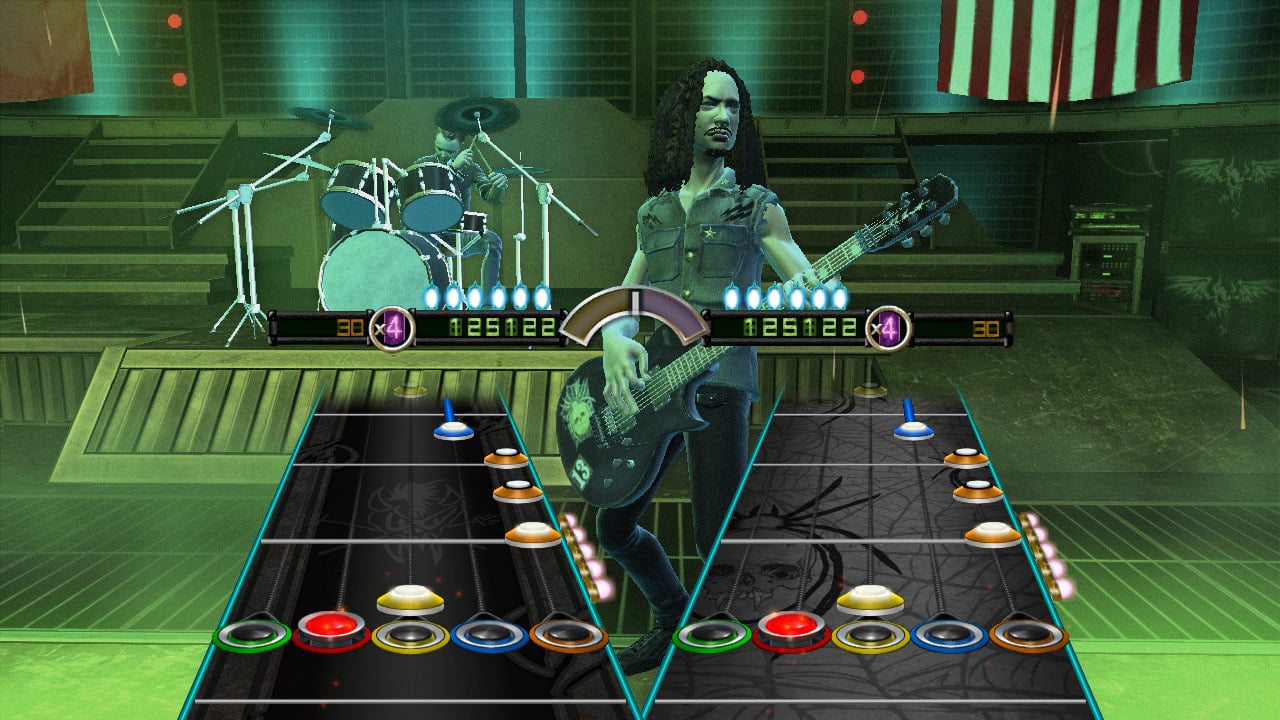
There was a time when your game was nothing if didn't come with a large plastic peripheral that was hard to store. Music games like Guitar Hero and Rock Band soared to the top of the charts, racking up $1.6 billion in sales in 2008 alone.

Gamesutra charted the decline back in November, but the final numbers were much worse than expected. The sales for 2010 wound up somewhere around the $250 million mark. That may sound like a lot, but given the huge production and licencing costs involved with these products, that's not enough money to keep the lines profitable.

That's why, at the end of last year, Viacom listed Harmonix (the creators of the original Guitar Hero and Rock Band games), as a "discontinued operation" and put them up for sale. Two short years ago Harmonix was at the top of the mountain as a game developer and now they no longer exist. I've never actually seen a development house fall that far, that fast.

Now comes word that the Guitar Hero series has been axed, at least for the foreseeable future. Activision CEO Eric Hirshberg explained it it this way:
"Demand for peripheral-based music games [has] declined at a dramatic pace. Given the considerable licensing and manufacturing costs associated with this genre, we simply cannot make these games profitably based on current economics and demand. Instead, what we'll do is focus our time and energies on marketing and supporting our strong catalog of titles and downloadable content, especially to new consumers as the installed base for hardware continues to grow."
Short version: everyone has all the plastic guitars, drums, microphones, and zithers they'll ever need or want, so we're just going to sell songs online.

And that's actually completely reasonable. Given the declining sales, retailers were sure to balk at giving floor space to more big-box games, and producing the instruments isn't cheap. Licencing and selling new song packs, however, is as close to pure gravy as you're going to find. Although it's a bit surprising to see the "collapse" of an entire genre only a few years into its existence, I'm not sure I read this one as a collapse. The games and downloads continue to be fairly popular: people just don't need the big hardware and annual software updates anymore.


Wednesday, February 9, 2011

MathPuzzle.com

If you have any interest in recreational mathematics, you should make Ed Pegg, Jr's MathPuzzle.com a regular stop. Ed has a lot of news, comments, links, games, and puzzles. Since he's been doing this for 10 years, he also has a deep well of material on this site. Check it out.

A Closer Look: French Tarot: Trumps 1 & 2

This is an ongoing series looking some of the art which is unique to a French Ducale Tarot deck.

The Number 1 trump shows two different clown characters: an Italian Pagliacci, and a French jester holding his ninny stick.
Click to enlarge

No. 1 Trump: detail.

The Number 2 Trump shifts the focus to scenes from childhood.

Click to enlarge


No. 2 Trump: detail

Tuesday, February 8, 2011

The French Tarot

Tarot cards were not created for "divination," but to play games. Some people dispute this, claiming that the trump cards of a tarot deck (called the "Major Arcana") can be traced back to Jewish Cabbalism or ancient Egyptian mysticism.

"Fool" (click to enlarge)
This is the worst kind of pseudo-history, and yet another example of new agers inventing ancient "sources" for modern practices in order to give them a patina of credibility. There is no evidence at all that the Trumps were adapted for fortune-telling purposes before the 18th century, while the cards themselves date back at least several hundred years earlier. Any person or source that claims otherwise is just making things up.

That's not to say that the more familiar "Major Arcana" images used for the Trumps do not have an historical or philosophical aspect. Carl Jung wrote extensively about their meaning and relevance to analytical psychology, tying them to his theory of archetypes. Catholic mystic Valentin Tomberg wrote an entire book, Meditations on the Tarot, that used their symbols as a point of departure for a series of meditations on Christianity. This is because symbols have power, and the images used in the Major Arcana evolved from a Catholic culture that was rich in symbolism. The Major Arcana are clearly derived from a mixture of folklore, courtly culture, and Christianity, and thus offer a kind of cross-section of the secular and religious world of the 15th century.

The word "tarot" comes from the Italian version of the cards, which are called "tarocchi." This in turn may be a reference to the Taro River, or may be derived from an Arabic word. The decks vary from region to region, but the most common deck consists of 78 cards: four suits numbered 1 to 10, 4 court cards in each suit, 1 fool, and the  21 illustrated trump cards.

Valet and Dame (click to enlarge)
These trumps, plus the fool, were later adapted as the "Major Arcana," but in gaming they function as permanent trump cards valued from 1 to 21. Our current standard decks dropped this trump suit, but kept the idea of assigning one of the standard suits as a "trump" for trick taking games.

Deck design can vary greatly, and as I begin rolling out a series on the French Tarot, you'll see just how the images were adapted for various times and cultures. The deck I plan to post is a standard Ducale French Tarot set, which are a complete departure from the more traditional Italian tarot. Based on the clothing and the utter lack of religious symbolism, these particular designs date from the 19th century or later. (Post-revolutionary France made a concerted effort to expunge religious symbolism from the culture. Oddly enough, they kept the courtly symbolism.)

Thus, the images on the Trumps are not the more familiar Arcana, but rather scenes taken from everyday life, showing peasants, laborers, members of the middle and upper classes, military, and typical bucolic scenes. I'm starting with the court cards today, but I'll post some art of the Trumps over the next few days.

Cavalier and King (click to enlarge)

Sword & Poker Series is Available Again


A couple months ago, I learned that the wonderful Sword & Poker games (which I review here) had kinda sorta disappeared from the App Store. I checked, and they hadn't actually vanished: you were simply unable to complete a purchase.

Then they vanished.

Now they're back.

My understanding was that the company that made them, GAIA Co., had gone under and that was that.

These games may not be around for long, so grab 'em while you can. They really are a lot of fun.

And, yes, the App O' The Mornin' will return soon. As I mentioned, I did over 100 app reviews in a very very short period of time, and then my brain went pfffft. I just needed an app break. Also, the flow of apps that allowed for me to say interesting (or at least amusing) things kind of slackened after the Christmas release blitz. I'll be back at it again soon.

Monday, February 7, 2011

The FCC: Stuck in Neutral (Maximum PC, March 2011)

This month's "Game Theory" column for Maximum PC has generated some wider interest, but it is not yet on the magazine's site. Since I've been asked to make it available, Max PC has allowed to me to publish a slightly longer version here. 

“FCC seeks internet control” was one of the main themes of tech reporting in 2010. The first thing that surprised me was that an agency created in the 1930s to regulate the radio spectrum was attempting to exert their nonexistent authority over the entire internet.

The second thing that surprised me was that the FCC continues to exist at all. Like the Federal Reserve and the Departments of Education, Agriculture, Homeland Security, and Health & Human Services, it’s a useless, self-perpetuating bureaucracy that does more harm than good. The courts have already told the FCC where to step off, but the Obama administration won’t let it rest.

This is no place to hash out the arguments for and against so-called “net neutrality.” Simply put: I’m agin’ it. It’s one of those things that sounds perfectly reasonable (we need to protect open access to the internet!), but in fact addresses a nonexistent problem.

Worse, it just let’s the camel’s nose under the tent. In this case, the nose is the FCC and their regulatory power, and the tent is the entire internet. If you think the 5 appointed political hacks on the Commission are just the people to tame the wild internet, then your naïveté is kind of sweet. It’s also infantile.

But how does any of this impact gaming, you may ask?

Well, online gamers may well be targeted as “bandwidth hogs” as ISPs try to accommodate growing demands for bandwidth. The rapidly increasing demands for streaming video and online gaming are certainly going to require a better infrastructure. Free enterprise will realize there is a buck to be made, and step in to increase that capacity, or restructure their fees so that people who use more pay more.

I’m fine with that. I don’t see why my parents’ household (which uses their internet access mostly to forward chain letters and long-debunked urban legends) should pay exactly the same fees as mine (which regularly hoovers up a couple hours of Netflix and a few more of online gaming per day).

In truth, games aren’t a vast bandwidth drain. Some estimates put World of Warcraft, for example, at less than 5MB per hour, and a little higher when more characters are involved in an event. A shooter, however, might eat anywhere from 40MB to 300MB per hour, depending on the game, size of the session, and other factors.

Government regulation cannot increase the bandwidth we need for our games. Only private industry can do that, and the one thing guaranteed to slow that growth is more regulation.

Friday, February 4, 2011

Cargo Noir: First Impressions

Cargo Noir
Days of Wonder
2-5 players
Ages 8 and above
30-90 minutes
Designed by Serge Laget

 Note: These comments are based on a single play session, which is insufficient for a complete review. It's just meant as a few quick, fresh-out-of-the-box thoughts, along with a more detailed explanation of the gameplay and rules. When I've put in more time, I'll adapt it as a final review.

Goal
Cargo Noir is a set-making game with an auction element and a number of unique characteristics that keep it interesting. The theme is cargo smuggling among exotic ports throughout the world. You play as one of 5 organized crime syndicates, moving a fleet of ships from port to port to collect cargo tokens. These are, in turn, traded for victory spoils, which determine the winner of the game.

Production & Components
The quality of the components is top-notch, as we'd expect from Days of Wonder. The gameboard is created by placing together different ports of call tiles around a large central square representing Macao. The game comes with 25 rubberized ships (5 for each player), 60 plastic cold coins, 131 small cargo tokens on heavy cardboard, 54 victory cards, 5 family sheets, a wooden turn marker, a cardboard ship used to designate the first player, and a cloth bag used for blind drawing of cargo. The main game board is heavy cardboard, while the family sheets are lighter card stock.

The art is wonderful, and the game really embraces its theme throughout every aspect. Even the little boats match the visual style created by Small World's master artist Miguel Coimbra.The art is filled with small, funny details, and loaded with character. No one is doing better game art than Coimbra right now.

Although it's quite possible my brain simply went on vacation last night, I simply was not able to get the pieces back in the box in a satisfactory way. The insert is all carefully sculpted so that I should be able to, but there are so many little cargo tokens, as well as a bulky bag of ships, that I just couldn't make it fit. Am I missing something?

Scalability
We tested the game once with 4 players, but it uses clever board configuration to scale up to 5 or as low as 2. By flipping certain port tiles, you're able to "close" various ports, thus reducing the locations where people can contend for cargo. This seems like a clever solution to the scaling issue, but I haven't yet tested it in practice.

Gameplay
The game is played over 10 or 11 turns depending upon number of players, with each turn featuring 3 phases. The phases are: 1. Resolve ship actions. 2. Trade cargo for victory cards. 3. Place ships.

The goal is to collect as much cargo as you can from various ports. There are 9 different types of cargo and 5 wild cards. These smuggled goods are cigars, cars, weapons, gold, jewels, uranium, ivory, alcohol, and art. You want to collect as many matching sets of cargo as possible, since sets are worth more in the trading phase. For example, 5 unmatched goods are worth 15 points in trade, but 5 matched goods are worth 25 points in trade. Thus, you want to start building sets of, say, ivory or gold, rather than just grabbing as many different goods as possible.

You also want to build sets because your warehouse capacity (located on your family sheet) is initially limited to 6 slots, which can each hold 1 type of cargo. This can be expanded by two slots for each extra Warehouse card you buy. Any cargo you can't store is lost at the end of the trading phase.

Cargo is acquired by sending your ships into various ports. You start with 3 ships, but can expand this up to 5 ships by buying extra Cargo Ship cards.

Each port is loaded with varying amounts of cargo. Cape Town, for instance, only offers 1 piece of cargo, while Rotterdam has 4. Cargo is captured when you are the only player in a port in the "Resolve ships' actions" phase of the game. In order to be that person, you have to place your ship on top of the number of coins you're willing to spend for the cargo. However, other people may place a ship in the same port, as long as they place that ship with 1 more coin than the highest "bid" for that cargo. The coins are thick plastic and stackable, allowing players to quickly compare the size of their bids.

If you are in the same port with another player's ship, you either have to increase the size of your bid to exceed the highest stack, or withdraw it. The person left with the only ship in a port then collects all the goods and pays his coins to the bank. The game thus becomes a matter of oneupmanship, since you can keep adding coins to your stack in order to get a key piece of cargo or keep an opponent from getting one.

The Macao port at the center of the board provides two extra functions. If you place a ship on the top half, you can either trade one good for another that's already in the Macao Black Market, or pull a random cargo piece from the bag. If you place a ship on the bottom half, you collect 2 gold from the Casino.

The point of coins is to increase your buying capacity for cargo, and the point of cargo is to buy victory spoils. These are things like yachts, villas, night clubs, and dive bars, each costing a certain amount of cargo, and each worth the same amount in victory points when you total your score a the end of the game. (A yacht, for example, costs 20 points to buy, and adds 20 points to your total score.) In addition, there are 6 unique cards which have asymmetrical values. These are things like the Showbiz card, which costs 36 but is worth 40 in victory points. Because they have irregular values, the unique cards help prevent ties.

Thoughts
It's too soon to render a full verdict, but we certainly enjoyed our first, 4-person test game, even though I misunderstood one of the rules. The game is actually surprisingly easy to learn and teach. (It's far easier to play than it is to describe.) The theme carries through all the components and design features, adding a great deal of character and flavor to the experience.

Sending out your ships to collect cargo, not knowing if someone is going to try to snatch them away from you with a higher bid, creates a good deal of tension and player interaction. Balancing ship distribution among cargo purchase, money acquisition, and black market trading adds a nice level of strategy to each turn.

Some house rules can be added to mix things up a bit, such as player-to-player trading for cargo. My son even starting coming up with rules that would allow you to steal or sabotage to increase the player interaction and tension.

Cargo Noir, however, doesn't really need any extra layers to make it work. Quick impression: this is a good game: entertaining, light enough for younger gamers, but with enough meat to allow for some interesting strategic play. I need to put in more time to get a real sense of it, but so far it seems like another winner for Days of Wonder.

Thursday, February 3, 2011

Dead Space 2: Stupid Advertising

Once I get a little further in the game, I plan to write about Dead Space 2. Short version: I'm liking it a lot. It's certainly sick and gross, but in a good way!

Right now, however, I want to write about the stupid "Your Mom Hates This" advertising campaign, in which EA shows clips from the game to unsuspecting middle aged women and films their horrified reactions. It is wrong on so many levels I don't know where to begin.

First, this is an M-rated game, which means it's not supposed to be sold or marketed to people under the age of 17. So who exactly is the target audience for this ad? Are there that many 17-and-ups who still want to cheese off Mom with a violent video game? What exactly is the message they're sending? Are the game companies serious about keeping violent content out of the hands of minors, or just "serious" in a wink-wink, you-really-need-this-game-to-be-cool way. The question answers itself.

Second, there's the idea that EA targeted "conservative" women for the ad. Here's their own description:
A mom’s disapproval has always been an accurate barometer of what is cool. So Dead Space 2 was put to the test.
At an undisclosed focus group facility in the heart of conservative America, over 200 moms were recruited to participate in market research. Only, this wasn't market research. The facility was rigged with hidden cameras, microphones, and a crew sitting behind the glass ready to document very single reaction, opinion, and emotion.
Upon arrival, the moms were individually ushered into a room and confronted with three massive monitors, a single chair, and a disembodied voice coming over the speaker system. They didn’t know what they were going to see. They were only instructed to be completely honest.
We then subjected each mom to the most action-packed, violent, disturbing footage Dead Space 2 has to offer.
Some were disgusted. Some were shocked. Others couldn't believe what they were seeing. And every single mom hated it.
It's so nice when hipster marketing twats stereotype an entire region, class, gender and political ideology in order to hawk their products.

Third, it plays on the most trite methods of reinforcing a generation's sense of their own coolness. Rational adults should balk at such shameless manipulation. Attempting to exploit the generational divide in order to sell a few more copies of a game is crass marketing at its worst.

Fourth, I'm frankly not all that keen on surprise "shock video" reactions. I remember when "2 girls 1 cup" reaction videos were going around, and thinking, "That's just wrong." Some little punk showed it to his grandmother, who looked like she was pushing 100, and the woman just seemed to fall apart. She shouted "What's wrong with you?" and it wasn't an idle question: she really wanted to know how and why such things could be, and why a child she had loved would subject her to it. (Little did she know that he would post it to Youtube in order to hold her horror up to the world for mockery.) It was heartbreaking. What is the value in this? What does it say about our humanity?

Fifth, it simply reinforces the stereotype that games are only for hip kids. We've come a long way in mainstreaming electronic entertainment. Many gamers are adults, women, and, yes, moms. The entire campaign just reinforces the notion that games are silly, offensive kid stuff. This is particularly odd for Dead Space 2, which not only has visceral, violent content, but also some mature psychological and character elements. It's the opposite of a cheap exploitation game, yet that's how it's being sold.

Finally, it's just dumb and cruel. There's a "pulling wings off flies" quality to it that speaks to the worst aspects of our personalities. It's one thing to enjoy certain kinds of mature entertainment, but quite another to drag them out into the public square and then jeer at those who are offended.

Here's the whole stupid ad for your perusal.


Crazy Machines Elements Coming This Spring


Given the popularity of physics gaming (particularly on mobile platforms) it was about time for Crazy Machines to stage a comeback. Crazy Machines Element is due in spring as download for both Xbox Live and the PlayStation Network. No word yet on an app version, but they'd be crazy not to make one. (Sorry about that one...)

Crazy Machines was the original chain reaction, Rube Goldberg puzzler, and it actually still gets a heavy workout from the junior gamers of Casa McD. This time, Crazy Machines is adding the four elements--fire, water, air, and earth--to the mix. There are also plenty of new parts, including flamethrowers and cloud machines.

I'll let the PR folks take it from here:

Crazy Machines Elements has three game modes. In Puzzle mode, players must finish 100 partially-built chain reaction machines using the parts specified to accomplish the various tasks. Inventors can create true chain reaction marvels that obey the laws of physics and not only satisfy the requirements of the task, but also demand some serious brain power, inventiveness and physical out-of-the-box thinking. 
An example of the fun: A ball knocks a candle over which then heats the water in a steam boiler, which in turn slowly starts moving a rope attached to it. The action of the rope rotates a grindstone tied to the other end, which rubs against another stone to generate a spark which lights the fireworks. Players can tinker with a variety of other crazy machines awaiting them in each chapter. 
Budding inventors can unlock numerous challenges by solving puzzles where they complete tasks using the fewest number of parts in the shortest time; there are as many ways to achieve a particular task as there are parts available. Crazy Machines also has an editor in which players can build and try out their own crazy machines!

Wednesday, February 2, 2011

HeroClix Surfaces in Middle Earth


My son and I have amassed a fairly sizable collection of Heroclix over the years, so I was saddened to see that Topps had killed the entire Wizkids operation, including Heroclix, in order to "align our gaming initiatives more closely with Topps current sports and entertainment offerings." 

I see this kind of corporate-speak all the time, and it always strikes me as the kind of short-sighted, unimaginative decision that gets made by accountants. Heroclix is a popular niche brand with a killer license. There are creative ways to make that work within any company. If you've grown to a point that your management is too lazy or stupid to find those creative ways, then you're running your company wrong.

Apparently, a merchandising company named NECA, located in my home state of New Jersey, bought the Heroclix assets and are attempting to breathe fresh life into them.  First step? Add Lord of the Rings to the lineup.

Late in 2011, the new WizKids will publish "a HeroClix miniatures game followed by a HeroClix strategic board game."

Here's the official line:
"The Lord of the Rings" HeroClix miniatures game will be sold in two different packages: a campaign style box set and the traditional booster format. The all-in-one campaign style box set will include everything a player needs, including NEW epic level rules and maps. The booster format includes the figures, similar to other previous HeroClix releases. With whichever format chosen, all of the twenty or more figures will be compatible with other HeroClix miniatures games.
The second release is a unique semi cooperative HeroClix board game, following in the similar format of our other HeroClix board game products. HeroClix figures, a gameboard and several decks of cards provide all the components needed to play this unique take on "The Lord of the Rings" story. The fun twist in the game is that players get to play as the Nazgul working with and against other Nazgul trying to capture the One Ring before it reaches Mount Doom.

Bicycle Fan Backs (Vintage)

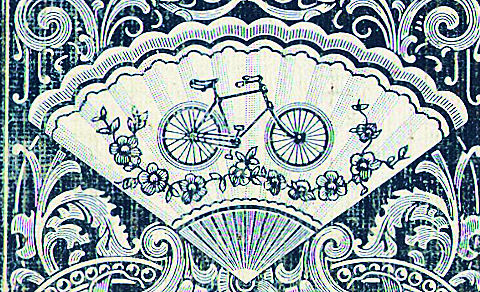
 I picked up this old example of a Bicycle "Fan Back" in the same auction with the USPC swastika cards. I can't possibly date them, since they seemed to have either been used heavily or perhaps put through the wash a few times. That said, I'm pretty confident in calling them "really old."

Click to enlarge
Detail

Tuesday, February 1, 2011

Windows 7 and Gaming

Yesterday was a column day, and it only took me 5 minutes to realize that my planned topic (Windows 7 and gaming) was going to be a dud. I was hoping that Windows 7 would do ... something for gamers. I don't know what. Maybe make them bacon and eggs.

What it did was a little bit of jack and a whole lotta squat. I'm not even getting higher benchmarks on Windows 7 than I did on Vista. It performs about the same. The Games Explorer allows you to access all your games from one handy place, which is a nice feature that cuts down on desktop clutter, but that's about it.

Even though I'm seeing few real gaming benefits, the OS is a welcome improvement over Vista. It runs well, the various Mac-ish graphical and navigational features are welcome, it's more stable, and the entire experience is just better.

The Windows Media Center remains a total clusterfark, of course. It runs like a sloth stuck in tar, and every time I start it up my laptop fan kicks into high gear. When I try to load my list of MP3s, the entire utility sees this as an opportunity to pop over to the neighbors for a cuppa and a little chat. It returns about 5 minutes later to offer me the single worst media interface I've encountered this side of DOS. Styling it after the Xbox interface might have been a good idea if a) this wasn't a computer OS, and b) the Xbox interface didn't already bite the wax tadpole.

On the positive side, the upgrade to Windows gave me some excuse to dig around in the native Windows games, which I'd never bothered to do with Vista. I'm actually pretty impressed.

The Games Explorer includes internet versions of Backgammon, Spades, and Checkers. These work marvelously well, anonymously matching players from around in the world in quick pickup games. Aside from the occasional drop-out player, I had no problems with these at all. They're simple, user-friendly, and work exactly as advertised. As a painless bit of light multiplayer, it's a terrific feature.

The versions of solitaire, chess, and hearts are fine, but certainly the last two would benefit from the same online matchmaking provided for backgammon, spades, and checkers.

Overall, a nice experience, but not one that can really sustain a full column. Instead, I wrote about horror gaming, with some thoughts on Dead Space 2 and Amnesia: The Dark Descent, both of which I plan to discuss in the future.

How to Make a Portable GamesChest Out of An Altoids Tin

Created by 'airship.' Check out the full picture to see tagged details of what it includes. I'll overlook the disgraceful lack of D20s, but maybe you can punch little holes in it for Cribbage?

h/t Julie D.  More great Altoids tin ideas can be found on the invaluable Art of Manliness site. (Seriously, spend some time on this site. Society has already slipped past the "Beta Male" stage and into the "Gamma Male" stage. Men need all the advice they can get.)

Friday, January 28, 2011

And the Name of the New Sony PlayStation Handheld Is....

... the NGP.

Well, that was kind of underwhelming.

It stands for "Next Generation Portable," which seems more like a description of the thing than an actual name. In all fairness, this may just be a working codename, like the Wii originally being called the "Revolution," before Nintendo announced the name would be "Wii" and everyone started making pee jokes; or when Microsoft's new motion control technology was called "Project Natal," before we were told it would be named "Kinect" and everyone said, "No, really, what are you planning to call it?"

This replacement for the PSP, whatever it winds up being named (I'm personally in favor of calling it the Frumious Bandersnatch, but do people very take my advice? No. Actually, that's probably for the best.) certainly specs out like a fine piece of next gen hardware.

I've said some remarkably uncharitable things about Sony over the years, to the point where they finally stopped sending me product, or giving me information, or braking if they see me crossing the street, so I'll just point you at the roundup of coverage over at Joystiq to fill in the sordid details.

The big picture is this: it appears to be a powerful system that is attempting to take on both Nintendo and the entire mobile gaming market at the same time. The big news is the 5-inch screen, which has four times the resolution of the current PSP, as well as a touchscreen. There is also a touchpad on the rear of the device, as well as dual analog sticks and six-axis motion control developed for the Move. All of these features are squarely aimed at capturing a piece of the app market.

Oh, and then there's the other stuff: WiFi, Bluetooth, and ... 3G, plus a GPS. Front- and back-facing cameras, flash-memory support, stereo speakers and microphone, all wrapped around a nougaty center made of an ARM Cortex-A9 4 core processor makes this a beast, in theory. Speculation is running high about how Sony can possibly get this device to market at a reasonable price. GameStop has already speculated that it may cost $1000, but that's just their guess.

Sony has a habit of floating their flights of design fancy just around the time a competitor announces or launches a product. In this case, the release is timed to take the wind out of the sales of the Nintendo 3DS by promising a Swiss-army knife of mobile gaming, but what's the actual reality behind the NGP?

The PS3 was going to be the all-powerful Xbox/Nintendo killer, and the reality was ... not really so much.

The Move was going to be the all-powerful Wii-mote/Kinect killer, and the reality was ... not really so much.

The NGB might be all things to all people, but somehow I don't think Apple, Nintendo, or the Android producers are all that worried right now.

In other Sony news ...

There's going to be a PSP phone, and engadget.com says they have their little mitts on one. The device will probably be called the Xperia Play, and looks like a mashup of a PSP with a Sony Ericcson handset.

Swastika Playing Cards Revisited

As I wrote last week, I've been trying to get my hands on a somewhat rare set of cards from the US Playing Card Company (makers of Bicycle, Hoyle, and other brands). This particular design features a pattern of swastikas, leading some to speculate that it was made for export to Nazi Germany. I think I demonstrated fairly conclusively that this was nonsense, and that the design was merely a common motif (sometimes a symbol for good luck) that was probably discontinued after Hitler rose to power.

Well, I finally won an auction for a single example of the card, and here it is. Based on various features, I'd date this one to sometime in the 1930s. It's in amazingly good condition for its age, with a firm coating, no bends or creases, and very little discoloration.


Wednesday, January 26, 2011

Struggle for Catan Coming This May

Today is the day for new release announcements from Mayfair. Next one up: Struggle for Catan: The Multi-player Card Game, releasing May 19 and retailing for $15.

Here's the official line:
The Struggle for Catan™ is a fast-paced game between the 2-4 factions developing newly settled Catan. Manage your resources to build settlements, cities, city improvements, knights, and roads that generate victory points or special abilities. While your settlements, cities, and city expansions remain yours, valuable roads and knights change hands. Varied expensive city improvements give you additional victory points and lasting advantages, so they’re generally key to victory. As in The Settlers of Catan® board game, you win by being the first to acquire and play 10 victory points.
The Struggle for Catan™ is the perfect way for 2-4 players to swiftly and casually explore, settle, trade, and build on the beautiful and ever-changing island of Catan.
The box contains:
• 67 Resource Cards
• 42 Building Cards consisting of:
• 9 Road Cards
• 14 Settlement/City Cards
• 5 Knight Cards.
• 9 City Improvement Cards
• 4 Building Cost Cards
• 1 Destiny Card
• full-color rules

Automobile Coming in February (Mayfair Games)

Martin Wallace is best-know for his superb train games, including my favorite, Steam. I'm very curious about his latest, called Automobile and due from Mayfair next month. Maybe I'll get a peak at it during Toy Fair.

Here's the official press release:

Mayfair Games is pleased to announce that it has finally received copies of Martin Wallace’s Automobile™ at its warehouse and will start shipping copies to retailers and distributors on January 31, 2011.  The game is scheduled to have a street date of February 17, 2011.  Mayfair Games apologizes for the many delays and thanks everyone for their patience. 
Automobile™ is the second in a series of transport games by Martin Wallace (the first being Steam™) and published by Mayfair Games (the “Planes, Trains and Automobiles” series).  The third title, involving the dawn of air travel, is currently in development.
Automobile™ joins a group of titles scheduled to be released from Mayfair Games in the beginning of 2011 including London™ (also by Martin Wallace), Van Helsing™ (by Frederic Moyersoen), 1830™ (by Francis Tresham), the re-released Catan Dice Game™ Standard Edition  and Struggle for Catan™: The Multi-Player Card Game ( both by Klaus Teuber).

PSP2 Announcement Tonight

Speculation about the Sony PSP2 is running pretty high ahead of the press conference scheduled for tonight. Dual-stick controls are a given, but could Sony also be entering ... the smartphone market?

Also of interest: What we think we know about the PSP2.

Stay tuned for more.

Posted from iOS using BlogPress.