Friday, September 9, 2011

Three Quick Takes: Bastion, Toy Soldiers, Deus Ex

I've been plowing a lot of hours over the past two weeks into pure gameplay and writing. I'm trying to finish all of Deus Ex (sidequests as well), just because I get a little obsessive about these things. My son doesn't get it. He consumes games like tissues, and doesn't understand the need to scour a level for little item and open every single locker. I hope one day to teach him the subtle pleasures of exploring the corners and sidestreets of a vibrant game world.

Some here are a few quick takes on what I've been playing this week:


Deus Ex: Human Revolution
Spectacular. And maddening. Everything about it is so good, and then you get to the boss battles and have this overwhelming urge to fly to Montreal and punch someone. Penny Arcade even did a comic about it. I'm merrily rolling along, doing the whole stealthy-hacky-persuader thing, and then every few hours I'm popped out of my bubble to fight some modified boss from hell in a level of spectacularly bad design. This is the kind of thing that shaves 10 points right off the top of a final score. 

I'm not just complaining because I find these moments difficult. I'm complaining because these moments are a like a musician suddenly playing off key in the midst of a spectacular performance. Every element of the design has encouraged me to make choices, and those choices are chucked back in my face at random, arbitrary moment as the designers say, "You know, you really should have invested in that Typhoon." 

Aside from that, everything else is wonderful. It just shows how we're starved for good, deep content. There aren't enough Mass Effects and Bioshocks out there to feed the need. This is a game with something on its mind, and it will be my debut review for the new Catholic News Service game review department, just to show how powerful games can be as a narrative medium. 

Bastion
Bation is just something you need to play to really understand its charm. It’s a solid action/RPG hybrid with an old-school vibe: you bash stuff, collect things, upgrade, and move along. What sets it apart is a wonderful design and sense of style, featuring a floating world that constructs itself as you explore. The landscape is a colorful, richly-imaged fantasy realm that draws you in and demands to be explored. It’s almost impossible to stop playing. I'm picking this one up for about a half hour every day. It doesn't make too many demands, but it rewards you with loads of fun and a surprising bit of depth for its genre. I even used it at the backdrop for a new headshot that publisher requested, just because it looks so sweet.

Toy Soldiers: Cold War
This sequel to last year’s insanely entertaining Toy Soldiers updates the series from little iron soldiers fighting in the trenches of WWI to GI Joe-style action figures fighting those pesky Reds. The novelty of the design was in the way it takes elements of tower defense games—such as placing weapons—and mixes them with action elements. You can actually take over and fire certain weapons and aircraft, which is a whole lot of fun. The entire game is steeped in 1980s nostalgia, complete with a Stallone action figure, lots of Cold War settings, and a complete 1980s action-movie vibe and cheesy synth soundtrack. If you have fond memories of either GI Joe or movies like Red Dawn or Rambo, this game is for you. We're mostly down to multiplayer on this one, and it's still great fun in 1 hour bursts of split screen. More maps are needed, however.

Gesundheit!
This is just a real charmer, thanks in no small part to the wonderful children's-book aesthetic. Beneath the cute visuals, however, is a game of surprising depth. You need to use a little green pig's (green pigs again!) prodigious mucus output to lead monsters into traps in order to survive a level. I'll get a full review of this one up soon.


Wednesday, September 7, 2011

Still Alive

I didn't intend to take such a long break, but wrapping up the December issue of Games took longer than expected. After that, I had to make up all the work I'd put off, finish one class and start another, get through Hurricane Irene, get the kids ready to go back to school, and organize my collection of pogs by color, value, and date. (Okay, so I made that last one up.) I'm helping start a new game review service for the Catholic News Service, which is kind of like the Associated Press of the Church. Extra work is good, but it will leave a little less time for blogging until I get the work load balanced.

I'll be slow getting back to blogging, because the financial crunch at Casa McD is at critical mass. If you are so inclined, using my Amazon or donation link in the sidebar will be a huge help. Donations help me do extravagant things like keeping the bank from foreclosing on my house and buying food.

I've managed to get a fair deal of gaming in, and I've been spending a great deal of time with Deus Ex: Human Revolution for a review. One word: awesome.


Wednesday, August 24, 2011

The Electronic Games 100: Done

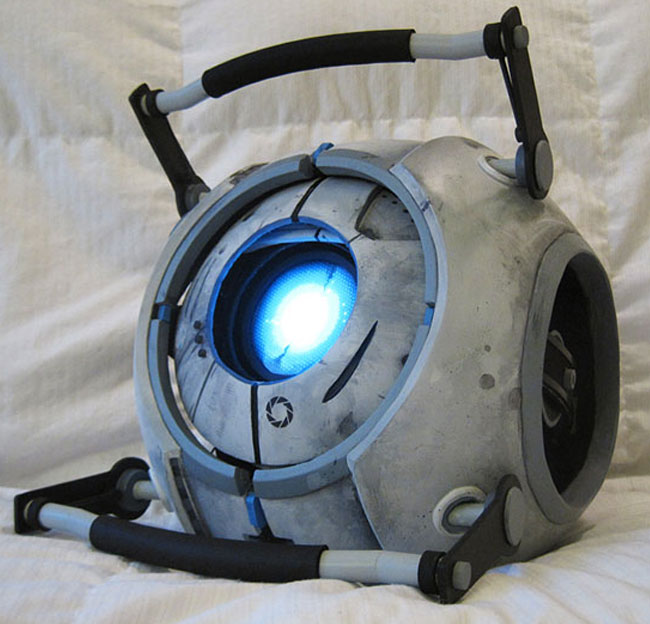
Wheatley, by TRP-Chan
The Games Magazine Games 100 is the biggest project I do all year: a 15-page supplement on the 100 best games from the last 12 months. We picked category winners in Action, RPG/Adventure, Mobile/Handheld, Strategy, and Sports/Driving, as well as Game of the Year. These categories fluctuate sometimes: when classic adventure games roamed the land freely, there were enough of them to support their own category. Mobile games are a new category, and there were so few platform-exclusive handheld games of note that I just dropped them into Mobile.

You'll have to wait for the December issue to find out what we picked, but I can talk a bit about the general contours of the game industry as it stands in 2010-2011.

The game industry continues to grow, but in strange and unpredictable ways. Here are some quick observations:
  • 72% of American households have a videogame machine. 
  • Consumers spent $25.1 billion on games in 2010, with those numbers projected to hit $48 billion for 2011 and $70 billion by 2012. By comparison, worldwide motion picture ticket sales for 2010 were approximately $31 billion. 
  • In studies of children 12 to 17 years old, 99% of boys (and 94% of girls) play video or computer games, with no variables for race or ethnicity.
  • The average game player is 37 years old, with 29% of them over the age of 50. 
  • Video games had skewed heavily male for most of their existence, but by 2010 48% of the gamer audience was female. 
  • Approximately 13% of the gaming audience is made up of males under 17, while 37% are adult women.
  • Electronic Arts CEO John Riccitiello revealed that since the year 2000, console games have dropped from 80% of EA’s total sales down to only 40%. What filled that vacuum? It was mobile devices, which are becoming the dominant platform in electronic entertainment. 
  • The 3DS was a dramatic flop. A lack of quality 3DS games and the explosion of the mobile market lay at the root of Nintendo’s woes. The company made deep price cuts in the hardware, but it may not be enough. For the first time in gaming history, Nintendo may lose its complete dominance of the handheld market. 
  • Mobile gaming has emerged the dominant force in interactive entertainment. This is not merely driven by technology, or convenience, or price point, although all of these are factors. It is driven by the wild creativity that is being unleashed in mobile gaming design. Apps are cheaper to develop, which means more people can make quirky and original games and get them directly to players without involving a publisher or retailers. As a result, a rich and previously inaccessible vein of innovation is tapped, radically changing the gaming landscape. The shocker in preparing for this year’s Games 100 was how many of these little games eclipsed an increasingly-derivative mainstream gaming market. While consoles are dominated by endless sequels, mobile gaming seems to offer a fresh new surprise every day. 

Wednesday, August 17, 2011

Couple Sells Children to Play Online Games

Sadly, this comes as no surprise in a society that values human life so little, but it's still disturbing:
A young Chinese couple has sold all three of their children in exchange for money to play online games at Internet cafes, reports a southern Chinese newspaper.
According to Sanxiang City News, the couple met in an Internet cafe back in 2007 and bonded over their obsession with online video games. A year later, the parents -- who are both under 21 -- welcomed their first child, a son. Days after his birth, they left him home alone while they went to play online games at an Internet cafe 30 km away.

Tuesday, August 16, 2011

Life Imitates Bioshock

I'm still working on the big issue, but I had to share this eerie story about an Objectivist billionaire attempting to build floating libertarian utopias.

Peter Thiel, founder of PayPal "has been a big backer of the Seasteading Institute, which seeks to build sovereign nations on oil rig-like platforms to occupy waters beyond the reach of law-of-the-sea treaties. The idea is for these countries to start from scratch--free from the laws, regulations, and moral codes of any existing place."

What could possibly go wrong?

Yesterday's outrageous plot for Bioshock is tomorrow's reality. I wonder if they'll call it "Rapture."

H/T Sean Dailey (check out his awesome magazine, Gilbert)

Friday, August 12, 2011

Jonathan Stark's Social Experiment

This isn't about games, but it's a good story that's certainly going viral. App developer and author Jonathan Stark has made his Starbuck's card publicly available. Here it is:

Just save the picture to your phone, run it under the barcode scanner, and if there's any money in the account, then someone else has just bought you a cup of really bad coffee. (I detest the flavor of Starbucks.)

You can check the card's current account balance via Twitter.

Stark also posts directions on how to place money back on the card, for people who want to buy someone else a cup of coffee. 

As social experiments go, it's kind of fascinating. A glance at the Twitter feed shows the card running out and then filling up again. In the midst of complete economic collapse, it's heartening to know that someone is willing to buy a stranger a cup of coffee.

Historically, America has always been an absurdly generous nation. I like to imagine that this quality will save us when our governing and financial systems finally break down; that we will band together in charity and support rather than turning on each other in fear and anger.

"When the chips are down," the Joker says in The Dark Knight, "these 'civilized' people will eat each other." That certainly seems to be what's happening in England right now. Are we any better? I like to think so. Maybe Stark's small experiment is a little glimmer of light.

1979: A Game About the Iranian Revolution

Before leaving to found his own company, Navid Khonsari was one of the people who gave Rockstar's games, such as Grand Theft Auto and Red Dead Revolver, their cinematic feel. After producing critically acclaimed titles like Alan Wake and Homefront, the Iranian-born director and producer is turning his attention to the Islamic revolution that drove his family from their homeland.

In 1979, Khonsari is tackling the events surrounding he deposing of the Shah, the rise of the Ayatollah Khomeini, and the hostage crisis. He's well aware of the controversial nature of the project:
Iranians are going to criticize me because I'm making a game that 'promotes American imperialists going in and shooting Iranians'. Americans are going to criticize me because I'm making a game that 'glorifies Islamic fundamentalism,' or something. I'm not going to please everyone, and the point of the game isn't to do that. 
I think that being able to base a game in contemporary historical truths is significant, besides being educational. It opens people's eyes to look beyond what they're reading in the paper and realize that there's a definite relationship between history and the headlines.

Read the whole thing.

A Psychiatrist Tries to Understand Angry Birds

Okay, this is my absolutely last Angry Birds post for this week. Dr. Dinah Miller is trying to figure out why people are hooked on this game. Help her out. While you're at it, maybe you could give me a clue. I liked Angry Birds fine when it was called Crush the Castle, and I like the art, but I've just never spent all that much time with it.

Wednesday, August 10, 2011

London Riots Blamed On...

... Grand Theft Auto?

Kotaku spotted this quote from a constable, buried in a story in the London Evening Standard:
These are bad people who did this. Kids out of control. When I was young it was all Pacman and board games. Now they're playing Grand Theft Auto and want to live it for themselves.
Ah ... no. Look, I detest the content of Grand Theft Auto, but this is just absurd. Generations of class warfare rhetoric, a culture of entitlement and dependency, and the erosion of a distinct British character in favor of the vague promises of "multiculturalism" is at the root of these problems, not some game. When you listen to these two stupid girls brag about their crimes, you have all the explanation you need for the nightmare engulfing England. The British made it through the Blitz because they believed in their nation and the importance of sacrifice and honor, and then raised a generation that derided these things.

On the other hand: yay, boardgames and Pac-Man! You both get the English Police Constable Vote.

These Birds Aren't Angry, Just Mad

Sorry for the light posting, folks, but my publisher moved up the print date for the Games 100, and there hasn't been much time left over for the blog.

In the meantime, I leave you with the surest sign that Angry Birds have entered the pop culture pantheon: a MAD magazine cover.

The full cover is here (mild language warning). 

Monday, August 8, 2011

App O' The Mornin': Cut the Rope: Experiments

Grade: A
Price: $1

Cut the Rope is one of the few games to challenge the dominance of Angry Birds in the hearts and devices of app gamers. Cute, clever, and insanely addictive, it combines a wonderful puzzle mechanic with an appealing visual style to make a knock-out game.

Cut the Rope is one of those rare games where the title is also the instruction manual. In a series of single-screen puzzles, hanging objects function like pendulums. You need to cut the ropes at precisely the right time and in exactly the right sequence to get the object where it needs to go.

In this case, the problem is how to get a piece of candy into the mouth of a voracious (yet adorable) little monster named Om Nom. Each puzzle has three stars and a piece of candy.  Cut the rope with a finger swipe, and the candy collects the stars as it drops into Om Nom's mouth. It's fairly easy to get the candy into the monster's mouth, but to get it there while collecting all three stars can be incredibly challenging.

The original game came with 4 sets of 25 puzzles each, and more sets were released with updates and holiday packs. In the first full-blown sequel--Cut the Rope: Experiments--the initial set of puzzles functions as a recap of the entire first game.  All of the many puzzle elements are re-introduced: balloons, whoopee cushions, spiders, rubber bands, ropes, and so on. 

There are only two other puzzle sets: "Shooting the Candy" and "Sticky Steps"--for a total of 75 puzzles. This is fewer than the original, but updates are promised.

The new gameplay elements are certain to appeal to CtR Fans. The targeting button shoots a rope to the candy as it swings. This rope can be of various lengths depending upon how far away the candy is when you fire. If the candy is swinging close to the rope shooter, the rope is short; if it's further away, the rope is longer. 

The other new element is the suction cup. Tap this cup, and it comes loose from the "wall" of the puzzle and begins to drop. This allows you to reposition ropes, creating far more variables on each screen.

These new features are run through their paces in two sets of twenty-five puzzles each, creating complex variations of the familiar CtR gameplay. Lvels are of consistently high quality. The basic solution usually isn't all that hard, but earning 1, 2, and 3 stars can be brain-bendingly difficult. There are some I simply couldn't solve at the 3-star level no matter how many times I tried. That's a good thing: it means the game is still challenging, which keeps it interesting.

It is a bit disappointing to have only 75 puzzles and 2 new elements, but there's more than enough here to keep things fun and fresh, and the updates give you something to look forward to. Cut the Rope is one of the best puzzlers in mobile gaming, and Experiments only further cements its reputation.

Wednesday, August 3, 2011

Math Clocks

I just spotted these on Amazon. I particularly like the one on top.


Malfoy v. Potter in Scrabble Throwdown

Harry Potter actors Tom Felton (Draco Malfoy) and Daniel Radcliffe (Harry) ended their decade-long on-screen rivalry with a cut-throat game of Scrabble. As Felton tells it, after the big wrap party for the final film,
There was an after, after party, if you will, and we had a few of the cast members there. Everyone was expecting us to be popping Cristal and all the rest of it but we actually played Scrabble until about two in the morning; Daniel [Radcliffe] and I got very heated at a game of Scrabble!
H/T Kim Vandenboucke at The Game Aisle 

The New Cut the Rope is Due ...

... tonight! It's called Cut the Rope: Experiments. TechCruch was able to squeeze a few meager facts out of the developers:

What on earth is Om Nom?! That’s what millions of fans of the widely acclaimed game, Cut the Rope, have been asking about the cute little monster who eats candy like its his job! That same question has a mad (but not bad) scientist studying the little creature that mysteriously arrived outside his house.

There's a teaser trailer up at TechCrunch, but it doesn't have any in-game footage. I think Cut the Rope's gameplay kicks Angry Birds in its feathery butt, so you better believe I'll be checking the app store around midnight. 

A Few Words About Cards and Cribbage

Jordan Wiklund did an interview with me at his site, Cribbageland. Don't forget to check out his event, Cribbage in the Field, if you're in the Minneapolis area. 

Monday, August 1, 2011

Deepak Chopra Makes Boring Game

Actually, I've only seen the trailer, but I believe it is metaphysically certain that a forthcoming game from contemptible New Age quack Deepak Chopra will be blindingly boring and spiritually nugatory. THQ spent a bundle last year to nail down the rights to the Chopra ouvre, and the first fruit of that deal is named Leela. (I thought she was still working for Planet Express.)

The game includes things like "Chakra-based meditations." These "task players with moving their bodies to control graphics onscreen set to a soothing soundtrack ... the root chakra exercise, for example, directs players to tilt their hips to seed a virtual planet." It seems to be a motion control thing aimed at the Wii and Xbox Kinect markets. I shall be waiting by my mailbox every day until it arrives.


Here's my favorite D-Pak moment:


Exit quote from Deepak: "Hope is a sign of despair." And people have made this fool a multi-millionaire for peddling this tripe.

Diablo 3 To Include In-Game Auctions With Real Money

Blizzard's upcoming Diablo 3 will include many of the social and economic feature that are already found in World of Warcraft, including trades with in-game gold. However, Joystick is reporting that the current beta also includes a kind of in-game eBay that will allow players to purchase items from other players for real money. Blizzard will take a commission on each sale, and the money will go into the seller's Blizzard account. It can be used to buy other items from Blizzard, or cashed out for actual money (for another fee, of course).

This is a whole new concept in monetizing gaming that could have fascinating ramifications. There have always been gold farmers in online games. Some estimates claim there are already 100,000 to 200,000 people who do this for a living, most of them living in China. By integrating this process, Blizzard a) increases the reliability of the exchanges, and b) increases their own profits. Win-win! With the real-world economy in a shambles, will it be possible for even more people to supplement their income by collecting and trading items within games?

App O' The Mornin': Ascension: Chronicle of the Godslayer


Grade: B
Price: $5

Although burdened with a cumbersome title, Ascension: Chronicle of the Godslayer scratches an itch many gamers didn’t even know they had, at least prior to the release of Dominion.

Ascension is a deck-building game created by a team of Magic: The Gathering tournament players. Originally publishes as a conventional tabletop game, it feels a bit like a mashup of Magic and Dominion. Players take turns building a deck by buying various cards. Most cards either generate Runes or Power. Runes allow you to buy more cards to add to your growing deck, while Power allows you to defeat monsters. Players earn honor points by defeating monsters, and the player with the most honor, wins.

Each turn, a player can draw five cards. At the center of the table is a line of cards which can either be purchased for your deck, or “banished” in order to keep another player from purchasing them. As your deck grows, you begin to search for cards in specific classes—Enlightened, Lifebound, Mechanic, or Void—since these work well together. By careful deck building and management, you can create a hand that allows you to buy and fight effectively, thus earning more honor and winning the game. There is a modest strategic element to the deck building, and the game has a quirky, appealing feel.

There is a load of data on the screen, which makes the layout a bit cramped on an iPhone/Touch screen. It functions well, however, and there are no accidental moves that can ruin a game. Gameplay is addictive, with clever card design and a diverse range of powers to draw upon. The AI didn’t impress me much, but fortunately the game has a multiplayer component with a matching service. The result is quite entertaining.


Friday, July 29, 2011

Struggle for Catan: Tutorial

There's a new interactive tutorial available to give you a taste of Struggle for Catan. Check it out.


Kenken: Sudoku With Math


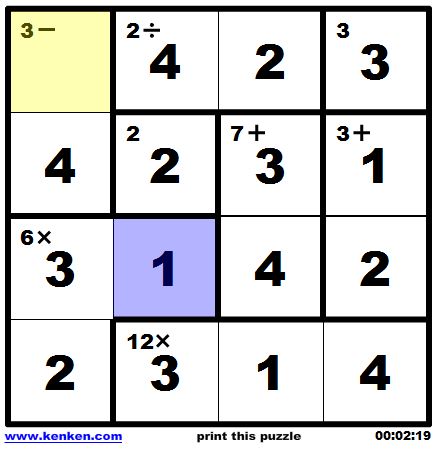
Kenken is a Sudoku variant invented by Tetsuya Miyamoto as a way to teach math. Frankly, Sudoku bores me senseless, but I found the addition of math makes the puzzles much more interesting.

The game is played on grids ranging from 4x4 to 9x9, and the rules are as follows:
  • Do not repeat a number in any row or column.
  • The numbers in each heavily outlined set of squares, called cages, must combine (in any order) to produce the target number in the top corner of the cage using the mathematical operation indicated.
  • Cages with just one box should be filled in with the target number in the top corner.
  • A number can be repeated within a cage as long as it is not in the same row or column.
Short version: the numbers you place in the bold boxes need to yield the number in the corner by multiplication, division, addition, or subtraction. 

Here's a video with Will Shortz (former editor of Games Magazine) explaining how to play.You can find playable puzzles at Kenken.com.